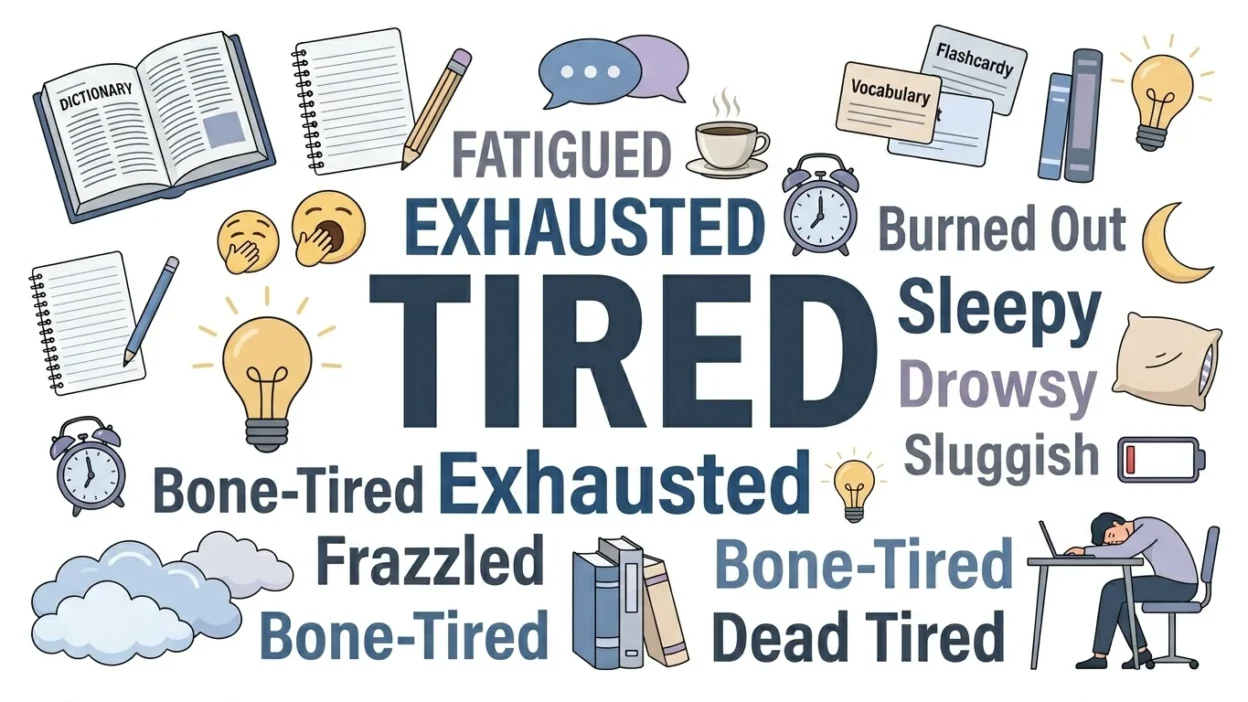
The word tired is one of the most commonly used adjectives in English. It describes a feeling of physical or mental exhaustion, a lack of energy or a need for rest. People use it to talk about long workdays, intense activities, lack of sleep or emotional stress.
While “tired” is a useful word, using it repeatedly can make your writing sound repetitive. Learning synonyms for tired can help students, ESL learners, writers and content creators describe different levels and types of fatigue more accurately.
In this guide, you’ll learn the meaning of “tired,” discover 30 useful synonyms, see practical examples and understand when to use each one.
What Does Tired Mean?
Tired means feeling a lack of energy because of physical activity, mental effort, emotional stress or insufficient rest.
Example:
After working all day, she felt tired and wanted to sleep.
The word can describe physical exhaustion, mental fatigue, emotional weariness or boredom.
Why Learn Synonyms for Tired?
Learning alternatives to “tired” can help you:
- Improve your vocabulary
- Avoid repetition in writing
- Describe different levels of fatigue
- Improve storytelling and creative writing
- Express emotions more accurately
- Communicate more effectively
Different synonyms emphasize sleepiness, exhaustion, burnout or emotional weariness.
30 Synonyms for Tired
1. Exhausted
Meaning: Extremely tired.
Example: He was exhausted after the marathon.
Best Usage Context: Physical fatigue.
2. Fatigued
Meaning: Physically or mentally tired.
Example: The workers felt fatigued after a long shift.
Best Usage Context: Formal and professional use.
3. Weary
Meaning: Tired from prolonged effort or stress.
Example: She looked weary after the journey.
Best Usage Context: Emotional and physical fatigue.
4. Worn Out
Meaning: Completely tired.
Example: I was worn out after cleaning the house.
Best Usage Context: Everyday conversations.
5. Drained
Meaning: Lacking energy.
Example: The stressful week left him drained.
Best Usage Context: Emotional exhaustion.
6. Burned Out
Meaning: Exhausted from prolonged stress or work.
Example: Many employees feel burned out after long hours.
Best Usage Context: Work and mental health.
7. Sleepy
Meaning: Ready to sleep.
Example: The baby looked sleepy after dinner.
Best Usage Context: Need for rest.
8. Drowsy
Meaning: Feeling sleepy and sluggish.
Example: The medicine made her drowsy.
Best Usage Context: Sleepiness.
9. Lethargic
Meaning: Lacking energy and enthusiasm.
Example: He felt lethargic all afternoon.
Best Usage Context: Low energy.
10. Sluggish
Meaning: Moving slowly due to tiredness.
Example: The team looked sluggish after the long trip.
Best Usage Context: Performance and energy.
11. Spent
Meaning: Completely exhausted.
Example: After the hike, they were spent.
Best Usage Context: Informal speech.
12. Beat
Meaning: Extremely tired.
Example: I’m beat after today’s work.
Best Usage Context: Casual conversations.
13. Bushed
Meaning: Very tired.
Example: The children were bushed after playing outside.
Best Usage Context: Informal English.
14. Pooped
Meaning: Very tired.
Example: I’m pooped after running errands all day.
Best Usage Context: Casual speech.
15. Overworked
Meaning: Tired because of too much work.
Example: The staff felt overworked during the busy season.
Best Usage Context: Workplace discussions.
16. Overwhelmed
Meaning: Mentally exhausted by responsibilities.
Example: She felt overwhelmed by her workload.
Best Usage Context: Emotional stress.
17. Frazzled
Meaning: Tired and stressed.
Example: The busy schedule left him frazzled.
Best Usage Context: Stressful situations.
18. Haggard
Meaning: Looking tired and worn.
Example: She appeared haggard after several sleepless nights.
Best Usage Context: Physical appearance.
19. Run Down
Meaning: Lacking energy because of overwork or illness.
Example: I’ve been feeling run down lately.
Best Usage Context: Health and wellness.
20. Weak
Meaning: Lacking physical strength.
Example: He felt weak after being sick.
Best Usage Context: Physical conditions.
21. Depleted
Meaning: Having very little energy left.
Example: The intense training left her depleted.
Best Usage Context: Physical and mental effort.
22. Listless
Meaning: Lacking energy and enthusiasm.
Example: The students seemed listless after lunch.
Best Usage Context: Mood and energy.
23. Spiritless
Meaning: Without enthusiasm or energy.
Example: His response sounded spiritless.
Best Usage Context: Emotional fatigue.
24. Faint
Meaning: Weak from exhaustion.
Example: She felt faint after standing for hours.
Best Usage Context: Physical exhaustion.
25. Dozy
Meaning: Slightly sleepy.
Example: I felt dozy after the long meeting.
Best Usage Context: Informal use.
26. Somnolent
Meaning: Very sleepy.
Example: The warm room made everyone somnolent.
Best Usage Context: Formal writing.
27. Enervated
Meaning: Drained of strength and energy.
Example: The heat left the hikers enervated.
Best Usage Context: Formal contexts.
28. Dog Tired
Meaning: Extremely tired.
Example: After moving all day, they were dog tired.
Best Usage Context: Casual conversations.
29. Bone Tired
Meaning: Deeply exhausted.
Example: She felt bone tired after working double shifts.
Best Usage Context: Strong emphasis.
30. Dead Tired
Meaning: Completely exhausted.
Example: I’m dead tired and ready for bed.
Best Usage Context: Everyday speech.
Comparison Guide: When to Use Different Synonyms for Tired
| Synonym | Best For | Intensity |
|---|---|---|
| Sleepy | Need for sleep | Low |
| Drowsy | Light sleepiness | Low |
| Weary | Long term fatigue | Medium |
| Drained | Emotional exhaustion | Medium |
| Burned Out | Stress and overwork | High |
| Exhausted | Physical fatigue | High |
| Bone Tired | Extreme tiredness | Very High |
| Dead Tired | Everyday extreme fatigue | Very High |
| Frazzled | Stress and tiredness | Medium |
| Lethargic | Low energy | Medium |
How to Choose the Right Synonym
For Physical Exhaustion
Use:
- Exhausted
- Worn Out
- Spent
- Bone Tired
These emphasize physical fatigue.
For Sleepiness
Use:
- Sleepy
- Drowsy
- Dozy
- Somnolent
These describe a need for sleep.
For Mental and Emotional Fatigue
Use:
- Drained
- Burned Out
- Overwhelmed
- Frazzled
These focus on stress and emotional exhaustion.
For Formal Writing
Use:
- Fatigued
- Enervated
- Somnolent
- Depleted
These sound more professional and academic.
For Casual Conversations
Use:
- Beat
- Pooped
- Bushed
- Dead Tired
These are common in everyday speech.
Common Mistakes When Using Synonyms for Tired
Confusing Sleepiness with Exhaustion
Being sleepy means needing sleep, while exhaustion involves a deeper loss of energy.
Using Informal Words in Formal Writing
Words like “pooped” and “beat” may not fit academic or professional contexts.
Ignoring Intensity Levels
Not all synonyms describe the same degree of fatigue.
Repeating the Same Alternative
Using varied vocabulary makes your writing more expressive and engaging.
Conclusion
Learning synonyms for tired can improve your vocabulary and help you describe fatigue more accurately. While “tired” is a useful word, alternatives such as weary, drained, exhausted, fatigued, burned out and bone tired allow you to express different levels and types of exhaustion with greater precision.
The best synonym depends on the context and the type of fatigue you want to describe. By understanding these alternatives, you’ll be able to write with greater clarity, confidence and variety in both academic and everyday situations.