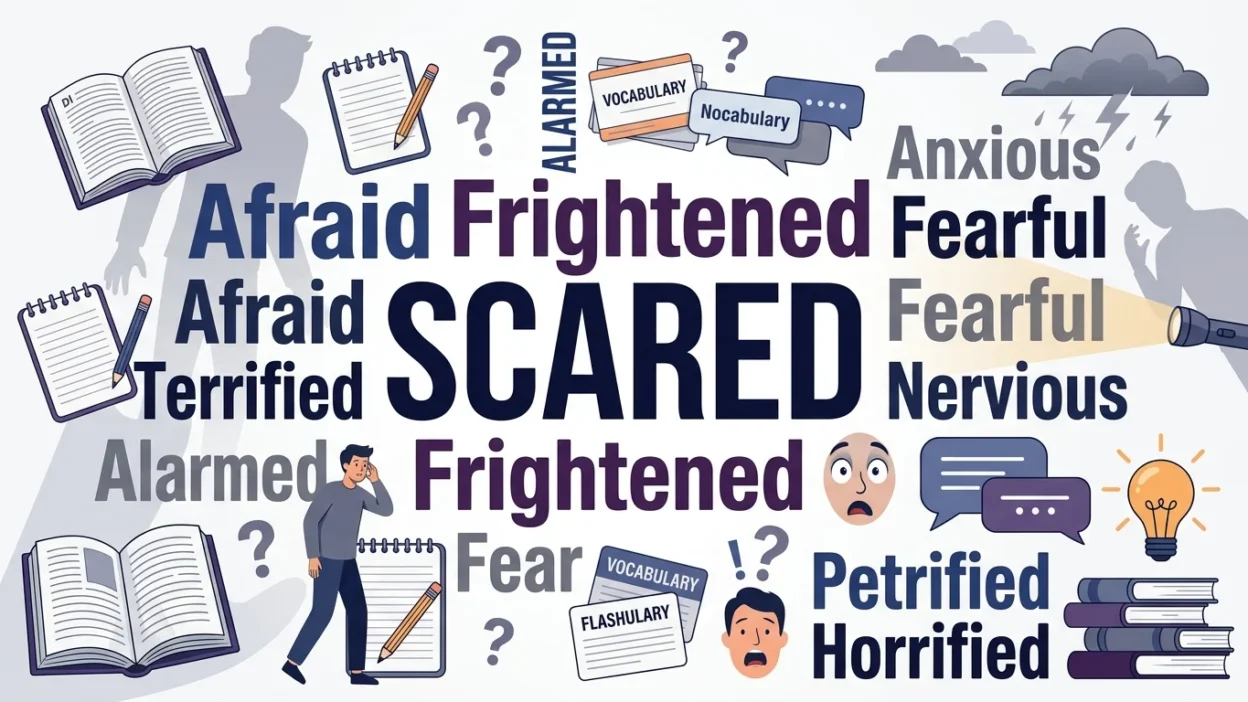
The word scared is commonly used in English to describe feelings of fear, worry or anxiety caused by danger, uncertainty or a frightening situation. Whether you’re talking about a person, an animal or a character in a story, “scared” helps express emotional reactions to something threatening or unsettling.
While “scared” is a useful everyday word, using it repeatedly can make your writing sound repetitive. Learning synonyms for scared can help students, ESL learners, writers and content creators describe different levels and types of fear more accurately.
In this guide, you’ll learn the meaning of “scared,” discover 30 useful synonyms, see practical examples and understand when to use each one.
What Does Scared Mean?
Scared means feeling afraid, frightened or worried because of a possible danger or unpleasant situation.
Example:
The child was scared during the thunderstorm.
The word can describe mild nervousness, sudden fright or intense fear.
Why Learn Synonyms for Scared?
Learning alternatives to “scared” can help you:
- Improve your vocabulary
- Avoid repetition in writing
- Describe different levels of fear
- Improve storytelling and creative writing
- Express emotions more accurately
- Create stronger character descriptions
Different synonyms emphasize nervousness, anxiety, shock, panic, or terror.
30 Synonyms for Scared
1. Afraid
Meaning: Feeling fear or worry.
Example: She was afraid of the dark.
Best Usage Context: General fear.
2. Frightened
Meaning: Feeling scared by something.
Example: The loud noise frightened the dog.
Best Usage Context: Everyday situations.
3. Terrified
Meaning: Extremely scared.
Example: He was terrified during the storm.
Best Usage Context: Intense fear.
4. Fearful
Meaning: Feeling or showing fear.
Example: She gave a fearful glance behind her.
Best Usage Context: Formal writing.
5. Alarmed
Meaning: Suddenly worried or frightened.
Example: The residents were alarmed by the warning.
Best Usage Context: Unexpected situations.
6. Panicked
Meaning: Overcome by fear.
Example: The crowd panicked when the lights went out.
Best Usage Context: Emergencies.
7. Nervous
Meaning: Worried or anxious.
Example: I felt nervous before the interview.
Best Usage Context: Everyday anxiety.
8. Anxious
Meaning: Feeling worried or uneasy.
Example: She was anxious about the exam.
Best Usage Context: Anticipation and concern.
9. Uneasy
Meaning: Slightly worried or uncomfortable.
Example: He felt uneasy walking alone at night.
Best Usage Context: Mild fear.
10. Apprehensive
Meaning: Worried that something bad may happen.
Example: They were apprehensive about the results.
Best Usage Context: Formal situations.
11. Concerned
Meaning: Worried about something.
Example: Parents were concerned about safety.
Best Usage Context: Moderate worry.
12. Troubled
Meaning: Disturbed by fear or concern.
Example: She looked troubled after hearing the news.
Best Usage Context: Emotional situations.
13. Startled
Meaning: Suddenly frightened.
Example: He was startled by the loud crash.
Best Usage Context: Unexpected events.
14. Shocked
Meaning: Deeply surprised and frightened.
Example: The announcement left everyone shocked.
Best Usage Context: Unexpected news.
15. Jittery
Meaning: Nervous and restless.
Example: The athletes felt jittery before the race.
Best Usage Context: Anticipation.
16. Tense
Meaning: Nervous and unable to relax.
Example: The room became tense during the discussion.
Best Usage Context: Stressful situations.
17. Timid
Meaning: Easily frightened and lacking confidence.
Example: The timid child stayed close to her parents.
Best Usage Context: Personality traits.
18. Cowed
Meaning: Frightened into submission.
Example: The workers were cowed by the threats.
Best Usage Context: Authority and pressure.
19. Intimidated
Meaning: Made fearful by someone’s power or presence.
Example: He felt intimidated by the experienced speakers.
Best Usage Context: Social and professional settings.
20. Horrified
Meaning: Extremely shocked and scared.
Example: She was horrified by what she saw.
Best Usage Context: Disturbing situations.
21. Petrified
Meaning: So scared that you cannot move.
Example: The hiker was petrified by the bear.
Best Usage Context: Extreme fear.
22. Terror Stricken
Meaning: Filled with terror.
Example: The passengers looked terror stricken.
Best Usage Context: Dramatic writing.
23. Spooked
Meaning: Easily frightened.
Example: The horse became spooked by the noise.
Best Usage Context: Informal speech.
24. Shaken
Meaning: Emotionally disturbed by fear.
Example: He was shaken after the accident.
Best Usage Context: Emotional reactions.
25. Distressed
Meaning: Very upset and worried.
Example: The news left her distressed.
Best Usage Context: Emotional situations.
26. Agitated
Meaning: Nervous and upset.
Example: The passengers became agitated during the delay.
Best Usage Context: Stressful events.
27. Trait
Meaning: Unreasonably fearful or suspicious.
Example: He became trait about being watched.
Best Usage Context: Extreme anxiety.
28. Dreadful
Meaning: Full of fear and dread.
Example: She felt dreadful before the surgery.
Best Usage Context: Anticipated fear.
29. Frantic
Meaning: Wild with fear or anxiety.
Example: The search became frantic after sunset.
Best Usage Context: Emergencies.
30. Horrified
Meaning: Deeply frightened and shocked.
Example: The family was horrified by the incident.
Best Usage Context: Serious events.
Comparison Guide: When to Use Different Synonyms for Scared
| Synonym | Best For | Intensity |
|---|---|---|
| Nervous | Everyday worry | Low |
| Uneasy | Mild fear | Low |
| Anxious | Concern about the future | Medium |
| Alarmed | Sudden fear | Medium |
| Frightened | General fear | Medium |
| Panicked | Loss of control | High |
| Terrified | Extreme fear | Very High |
| Petrified | Frozen with fear | Very High |
| Horrified | Fear mixed with shock | Very High |
| Terror Stricken | Intense terror | Very High |
How to Choose the Right Synonym
For Mild Fear
Use:
- Nervous
- Uneasy
- Concerned
- Apprehensive
These describe light worry or anxiety.
For Everyday Fear
Use:
- Afraid
- Frightened
- Alarmed
- Intimidated
These work in most situations.
For Strong Fear
Use:
- Terrified
- Panicked
- Petrified
- Terror-Stricken
These emphasize intense fear.
For Fear with Shock
Use:
- Horrified
- Shocked
- Distressed
- Shaken
These combine fear with emotional impact.
For Creative Writing
Use:
- Petrified
- Terror-Stricken
- Frantic
- Cowed
These create vivid emotional descriptions.
Common Mistakes When Using Synonyms for Scared
Using Strong Words Too Often
Words like “terrified” and “petrified” should be reserved for genuinely frightening situations.
Confusing Fear with Anxiety
Fear often relates to danger, while anxiety is usually connected to uncertainty.
Ignoring Intensity Levels
Not all synonyms describe the same degree of fear.
Repeating the Same Alternative
Using varied vocabulary makes your writing more engaging and expressive.
Conclusion
Learning synonyms for scared can improve your vocabulary and help you describe fear more accurately. While “scared” is a common and useful word, alternatives such as afraid, frightened, anxious, alarmed, terrified and petrified allow you to express different levels and types of fear with greater precision.
The best synonym depends on the context and the intensity of the emotion you want to convey. By understanding these alternatives, you’ll be able to write with greater clarity, confidence and emotional depth in both academic and everyday situations.