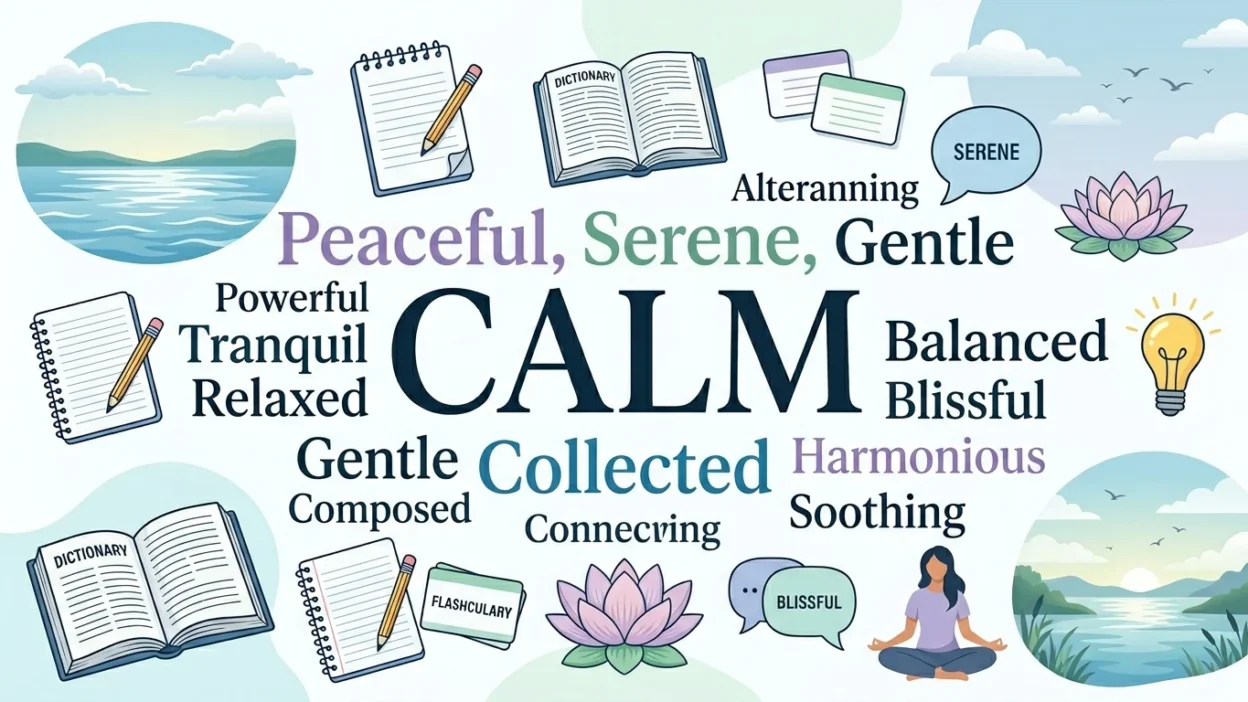
The word calm is commonly used in English to describe a state of peace, quietness and emotional control. It can refer to people, emotions, places, weather and situations that are free from stress, excitement or disturbance.
While “calm” is a useful and versatile word, using it repeatedly can make your writing feel repetitive. Learning synonyms for calm can help students, ESL learners, writers and content creators express different shades of tranquility, composure and relaxation more effectively.
In this guide, you’ll learn the meaning of “calm,” discover 30 useful synonyms, see practical examples and understand when to use each one.
What Does Calm Mean?
Calm means peaceful, relaxed and free from strong emotions, stress or disturbance.
Example:
She remained calm during the emergency.
The word can describe emotions, behavior, environments, weather conditions and relationships.
Why Learn Synonyms for Calm?
Learning alternatives to “calm” can help you:
- Improve your vocabulary
- Avoid repetition in writing
- Describe emotions more accurately
- Improve essays and creative writing
- Express different levels of peace and relaxation
- Communicate more effectively
Different synonyms emphasize quietness, emotional control, serenity or relaxation.
30 Synonyms for Calm
1. Peaceful
Meaning: Free from disturbance or conflict.
Example: The village was peaceful and quiet.
Best Usage Context: Places and situations.
2. Serene
Meaning: Calm and untroubled.
Example: She had a serene smile.
Best Usage Context: Emotions and scenery.
3. Tranquil
Meaning: Quiet and peaceful.
Example: The lake looked tranquil at sunset.
Best Usage Context: Nature and settings.
4. Relaxed
Meaning: Free from tension or stress.
Example: He felt relaxed after the vacation.
Best Usage Context: Personal feelings.
5. Composed
Meaning: Calm and in control of emotions.
Example: The speaker remained composed under pressure.
Best Usage Context: Behavior and emotions.
6. Collected
Meaning: Emotionally controlled and calm.
Example: She stayed collected during the interview.
Best Usage Context: Stressful situations.
7. Cool
Meaning: Calm and not easily upset.
Example: He stayed cool during the argument.
Best Usage Context: Informal conversations.
8. Unruffled
Meaning: Not disturbed or worried.
Example: She remained unruffled despite the criticism.
Best Usage Context: Emotional control.
9. Placid
Meaning: Peaceful and not easily excited.
Example: The river appeared placid.
Best Usage Context: Nature and personalities.
10. Still
Meaning: Quiet and motionless.
Example: The room was completely still.
Best Usage Context: Places and environments.
11. Quiet
Meaning: Making little or no noise.
Example: The neighborhood was quiet at night.
Best Usage Context: Locations and situations.
12. Restful
Meaning: Promoting relaxation and rest.
Example: The hotel offered a restful atmosphere.
Best Usage Context: Environments.
13. Gentle
Meaning: Mild and calm in manner.
Example: She spoke in a gentle voice.
Best Usage Context: Behavior and communication.
14. Mild
Meaning: Not severe or intense.
Example: The weather remained mild all week.
Best Usage Context: Weather and behavior.
15. Balanced
Meaning: Emotionally stable and calm.
Example: He has a balanced approach to problems.
Best Usage Context: Personality traits.
16. Stable
Meaning: Consistent and calm.
Example: The market remained stable.
Best Usage Context: Situations and emotions.
17. Levelheaded
Meaning: Calm and sensible.
Example: She is a levelheaded decision-maker.
Best Usage Context: Decision making.
18. Self Controlled
Meaning: Able to manage emotions.
Example: He remained self controlled throughout the discussion.
Best Usage Context: Personal behavior.
19. Poised
Meaning: Calm, confident and graceful.
Example: The athlete looked poised before the competition.
Best Usage Context: Professional situations.
20. Patient
Meaning: Calm while waiting or dealing with difficulties.
Example: The teacher was patient with her students.
Best Usage Context: Relationships and learning.
21. Harmonious
Meaning: Peaceful and balanced.
Example: The team maintained a harmonious relationship.
Best Usage Context: Groups and relationships.
22. Content
Meaning: Peacefully satisfied.
Example: She felt content with her achievements.
Best Usage Context: Personal happiness.
23. Easygoing
Meaning: Relaxed and not easily stressed.
Example: He has an easygoing personality.
Best Usage Context: Informal descriptions.
24. Laid Back
Meaning: Very relaxed and calm.
Example: They enjoyed the laid back atmosphere.
Best Usage Context: Casual settings.
25. Undisturbed
Meaning: Not interrupted or bothered.
Example: The forest remained undisturbed.
Best Usage Context: Nature and environments.
26. Settled
Meaning: Calm after activity or change.
Example: The crowd finally settled down.
Best Usage Context: Situations and emotions.
27. Soothing
Meaning: Producing calm feelings.
Example: The music was soothing.
Best Usage Context: Sounds and experiences.
28. Comforting
Meaning: Creating feelings of calm and reassurance.
Example: Her words were comforting.
Best Usage Context: Emotional support.
29. Meditative
Meaning: Deeply peaceful and reflective.
Example: The garden had a meditative atmosphere.
Best Usage Context: Reflection and mindfulness.
30. Blissful
Meaning: Extremely peaceful and happy.
Example: They enjoyed a blissful afternoon by the beach.
Best Usage Context: Positive experiences.
Comparison Guide: When to Use Different Synonyms for Calm
| Synonym | Best For | Tone |
|---|---|---|
| Peaceful | Places and situations | Neutral |
| Serene | Beauty and emotions | Elegant |
| Tranquil | Nature and relaxation | Gentle |
| Relaxed | Everyday feelings | Casual |
| Composed | Emotional control | Professional |
| Levelheaded | Decision-making | Positive |
| Easygoing | Personality traits | Informal |
| Soothing | Comfort and relaxation | Warm |
| Meditative | Reflection and mindfulness | Thoughtful |
| Blissful | Deep happiness and peace | Positive |
How to Choose the Right Synonym
For Emotional Control
Use:
- Composed
- Collected
- Levelheaded
- Self Controlled
These describe people managing emotions effectively.
For Peaceful Places
Use:
- Peaceful
- Serene
- Tranquil
- Still
These work well for landscapes and environments.
For Relaxation
Use:
- Relaxed
- Restful
- Easygoing
- Laid-Back
These emphasize comfort and ease.
For Relationships and Harmony
Use:
- Harmonious
- Gentle
- Patient
- Balanced
These highlight positive interactions.
For Deep Peace
Use:
- Meditative
- Blissful
- Serene
- Content
These describe profound calmness and satisfaction.
Common Mistakes When Using Synonyms for Calm
Confusing Calm with Happiness
A person can be calm without being happy and happy without being calm.
Ignoring Context
Some synonyms fit people, while others are better for places or situations.
Using Formal Words in Casual Situations
Words like “placid” or “meditative” may sound too formal in everyday conversations.
Repeating the Same Alternative
Using varied vocabulary makes your writing richer and more engaging.
Conclusion
Learning synonyms for calm can improve your vocabulary and help you express peace, relaxation and emotional control more accurately. While “calm” is a useful word, alternatives such as peaceful, serene, tranquil, composed, relaxed and blissful allow you to describe different forms of tranquility with greater precision.
The best synonym depends on the context and the feeling you want to convey. By understanding these alternatives, you’ll be able to write with greater clarity, variety and confidence in both academic and everyday situations.