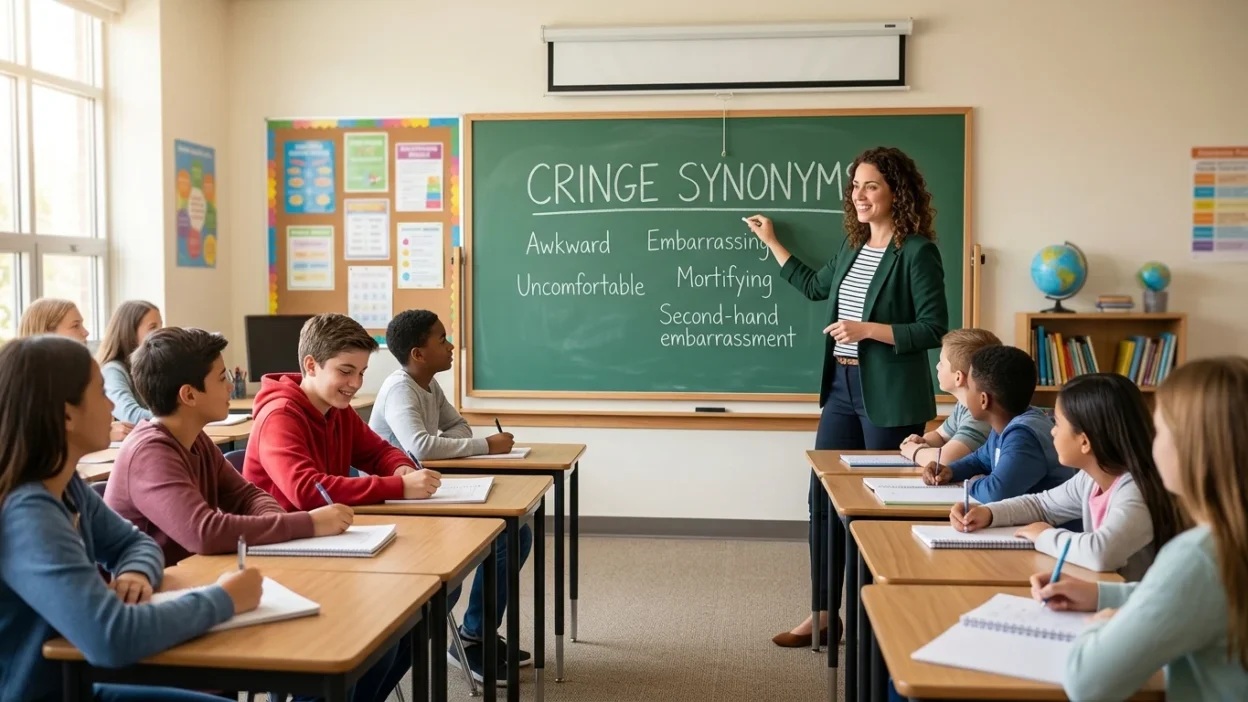
Looking for the best cringe synonyms?
Whether you’re a student, ESL learner, writer or content creator, learning different ways to say cringe can improve your vocabulary and help you understand modern internet slang and everyday English.
The word cringe can be used as both a verb and an adjective (in informal slang). As slang, cringe describes something that is embarrassing, awkward or so uncomfortable that it makes people feel secondhand embarrassment. It is commonly used on social media, in memes, gaming and casual conversations.
In this complete guide, you’ll learn the meaning of cringe, discover 30 useful synonyms, understand when to use each one and see beginner friendly examples.
What Does Cringe Mean?
Meaning of Cringe
As modern slang, cringe means embarrassing, awkward, uncomfortable to watch, or causing secondhand embarrassment.
Example of Cringe
- That speech was so cringe.
- I couldn’t watch the awkward interview because it was cringe.
- His fake accent made everyone cringe.
30 Best Cringe Synonyms
1. Embarrassing
Meaning: Causing shame or discomfort.
Example: That mistake was embarrassing.
Best Usage: Everyday English.
2. Awkward
Meaning: Uncomfortable or socially uneasy.
Example: The silence became awkward.
Best Usage: General conversations.
3. Uncomfortable
Meaning: Causing emotional discomfort.
Example: The conversation felt uncomfortable.
Best Usage: General English.
4. Painful
Meaning: Difficult or unpleasant to watch.
Example: The performance was painful to watch.
Best Usage: Reviews.
5. Mortifying
Meaning: Extremely embarrassing.
Example: Forgetting my lines was mortifying.
Best Usage: Personal experiences.
6. Humiliating
Meaning: Causing loss of pride.
Example: The public mistake was humiliating.
Best Usage: Formal and casual English.
7. Corny
Meaning: Overly sentimental or cheesy.
Example: The joke was corny.
Best Usage: Casual conversations.
8. Cheesy
Meaning: Overly predictable or sentimental.
Example: It was a cheesy romantic movie.
Best Usage: Entertainment.
9. Tacky
Meaning: Lacking style or good taste.
Example: The decorations looked tacky.
Best Usage: Fashion and design.
10. Ridiculous
Meaning: Silly or deserving laughter.
Example: That excuse sounded ridiculous.
Best Usage: Everyday English.
11. Silly
Meaning: Foolish or lacking seriousness.
Example: His behavior seemed silly.
Best Usage: General English.
12. Absurd
Meaning: Extremely unreasonable or foolish.
Example: The situation became absurd.
Best Usage: Formal writing.
13. Foolish
Meaning: Showing poor judgment.
Example: It was a foolish decision.
Best Usage: General English.
14. Lousy
Meaning: Unimpressive or uncool.
Example: That prank was lousy.
Best Usage: Informal slang.
15. Dorky
Meaning: Socially awkward in a harmless way.
Example: His dance moves were dorky.
Best Usage: Casual conversations.
16. Goofy
Meaning: Silly in a funny way.
Example: The goofy video made everyone laugh.
Best Usage: Informal English.
17. Uncool
Meaning: Not fashionable or impressive.
Example: That trend is uncool now.
Best Usage: Casual English.
18. Embarrassing to Watch
Meaning: Causing secondhand embarrassment.
Example: The interview was embarrassing to watch.
Best Usage: Reviews.
19. Secondhand Embarrassment
Meaning: Feeling embarrassed for someone else.
Example: I felt secondhand embarrassment during the speech.
Best Usage: Psychology and everyday English.
20. Facepalm Worthy
Meaning: So embarrassing it makes you want to cover your face.
Example: The mistake was facepalm worthy.
Best Usage: Internet slang.
21. Eye Roll Inducing
Meaning: Causing annoyance or disbelief.
Example: His comments were eye roll inducing.
Best Usage: Casual writing.
22. Over the Top
Meaning: Excessive or exaggerated.
Example: The acting was over the top.
Best Usage: Entertainment.
23. Try Hard
Meaning: Someone trying too hard to impress others.
Example: His behavior felt try hard.
Best Usage: Internet slang.
24. Forced
Meaning: Not natural or genuine.
Example: The humor felt forced.
Best Usage: Reviews.
25. Artificial
Meaning: Fake or lacking authenticity.
Example: The conversation sounded artificial.
Best Usage: General English.
26. Fake
Meaning: Not genuine.
Example: His reaction looked fake.
Best Usage: Casual conversations.
27. Overacted
Meaning: Performed with excessive emotion.
Example: The scene was overacted.
Best Usage: Movie reviews.
28. Juvenile
Meaning: Childish or immature.
Example: The jokes were juvenile.
Best Usage: Formal writing.
29. Immature
Meaning: Not behaving in an adult way.
Example: His comments sounded immature.
Best Usage: Everyday English.
30. Worthy of a Facepalm
Meaning: Extremely embarrassing or foolish.
Example: The misunderstanding was worthy of a facepalm.
Best Usage: Informal writing.
When to Use Different Cringe Synonyms
Quick Comparison Guide
| Synonym | Best Used For | Tone |
|---|---|---|
| Embarrassing | Everyday conversations | Neutral |
| Awkward | Social situations | Neutral |
| Corny | Jokes and romance | Informal |
| Cheesy | Movies and entertainment | Informal |
| Tacky | Fashion and design | Neutral |
| Facepalm-Worthy | Internet slang | Informal |
| Try-Hard | Social media | Slang |
| Forced | Reviews | Neutral |
| Mortifying | Personal experiences | Strong |
| Secondhand Embarrassment | Emotional reactions | Neutral |
How to Choose the Right Synonym
For Everyday Conversations
Use:
- Embarrassing
- Awkward
- Uncomfortable
- Silly
- Ridiculous
For Internet Slang
Choose:
- Facepalm Worthy
- Try Hard
- Lousy
- Corny
- Eye Roll Inducing
For Reviews
Use:
- Forced
- Cheesy
- Overacted
- Painful
- Artificial
For Formal Writing
Choose:
- Humiliating
- Mortifying
- Absurd
- Juvenile
- Immature
Common Mistakes When Using Cringe Synonyms
Understand Modern Usage
As slang, cringe describes something that causes embarrassment or discomfort. As a verb, to cringe means to shrink back or react with embarrassment. These meanings are related but not identical.
Match the Synonym to the Context
Use awkward for uncomfortable situations, corny for overly sentimental jokes, tacky for poor taste, and try-hard for behavior that seems overly eager to impress.
Avoid Slang in Formal Writing
Words like cringe, facepalm-worthy, and try-hard work well in casual conversations and social media but may not be appropriate in academic or professional writing. Instead, use embarrassing, awkward, or humiliating.
Why Learning Cringe Synonyms Improves Your Vocabulary
Understanding cringe synonyms helps you:
- Describe awkward situations more precisely
- Understand internet slang
- Improve creative writing
- Expand your English vocabulary
- Avoid repetitive language
- Communicate naturally in different settings
Using the right synonym makes your writing clearer, more expressive, and appropriate for your audience.
Conclusion
Learning cringe synonyms gives you many ways to describe embarrassing, awkward or uncomfortable situations. While cringe is one of the most popular internet slang terms today, alternatives such as embarrassing, awkward, corny, cheesy, facepalm worthy and secondhand embarrassment can better fit different contexts and levels of formality.
By understanding each synonym’s meaning, example and ideal usage, you’ll improve your vocabulary, strengthen your writing and communicate more naturally in everyday, academic and online English.