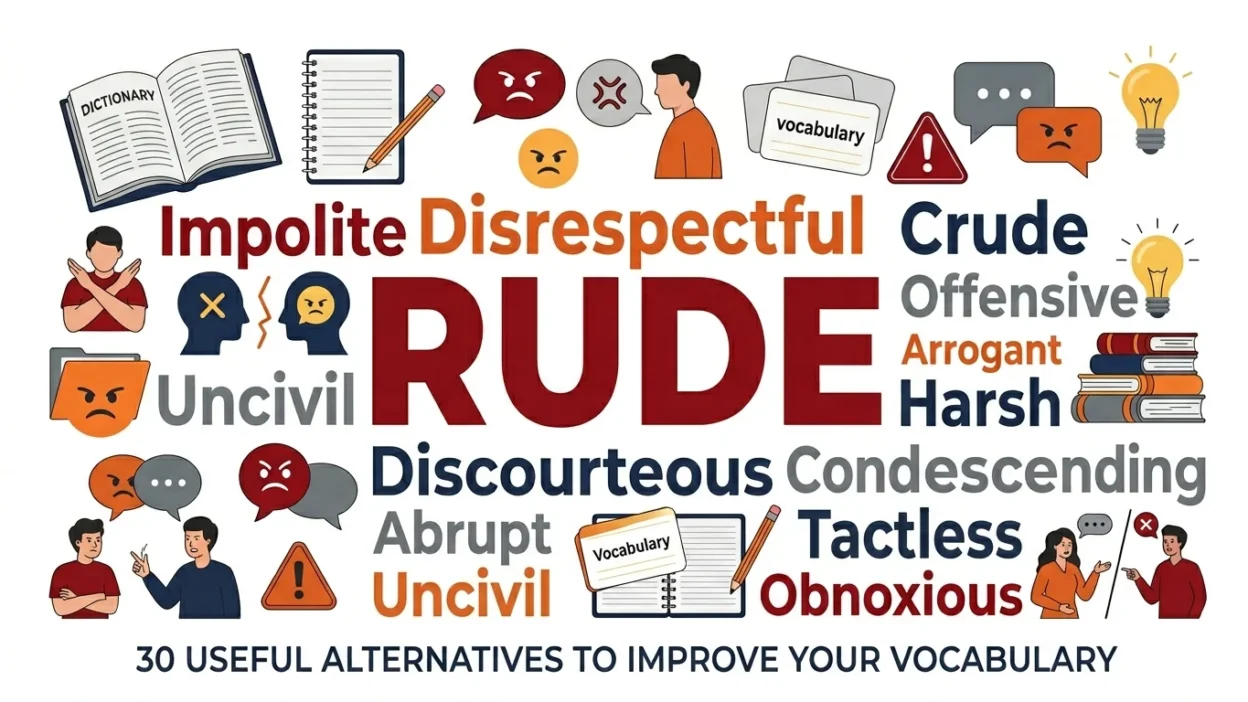
The word rude is commonly used to describe behavior that is impolite, disrespectful or offensive. Whether someone interrupts a conversation, speaks harshly, ignores social manners or treats others without respect, they may be described as rude. Because it is a frequently used word in everyday English, understanding its alternatives can greatly improve your vocabulary.
Learning synonyms for rude helps students, ESL learners, writers and content creators express different levels and types of disrespect more accurately. Some synonyms describe mild discourtesy, while others suggest deliberate offensiveness or hostility. Choosing the right word can make your writing clearer and more precise.
In this guide, you’ll learn the meaning of rude, discover 30 useful synonyms, understand their differences and see practical examples of how to use them correctly.
What Does “Rude” Mean?
Meaning of Rude
The word rude means behaving in a way that is impolite, disrespectful, offensive or lacking good manners.
A rude person may ignore social rules, speak harshly, interrupt others or act without consideration for people’s feelings.
Example Sentence
It was rude of him to interrupt her while she was speaking.
Usage Context
The word “rude” is often used when describing:
- Bad manners
- Disrespectful behavior
- Offensive comments
- Unkind interactions
- Workplace conflicts
- Social situations
- Poor customer service
30 Synonyms for Rude
1. Impolite
Meaning: Not showing good manners.
Example Sentence: It is impolite to talk during a movie.
Best Usage Context: Everyday manners.
2. Disrespectful
Meaning: Showing a lack of respect.
Example Sentence: The student’s disrespectful behavior upset the teacher.
Best Usage Context: Authority and relationships.
3. Uncivil
Meaning: Not polite or courteous.
Example Sentence: The discussion became uncivil very quickly.
Best Usage Context: Formal conversations.
4. Discourteous
Meaning: Showing poor manners or a lack of courtesy.
Example Sentence: The customer complained about the discourteous service.
Best Usage Context: Customer service.
5. Inconsiderate
Meaning: Not caring about other people’s feelings.
Example Sentence: Playing loud music late at night is inconsiderate.
Best Usage Context: Everyday behavior.
6. Offensive
Meaning: Causing hurt, anger, or discomfort.
Example Sentence: His comments were offensive to many people.
Best Usage Context: Language and behavior.
7. Insolent
Meaning: Showing disrespect in a bold manner.
Example Sentence: The employee was insolent toward the manager.
Best Usage Context: Formal situations.
8. Abrupt
Meaning: Suddenly unfriendly or blunt.
Example Sentence: Her abrupt reply seemed rude.
Best Usage Context: Communication.
9. Blunt
Meaning: Speaking very directly without considering feelings.
Example Sentence: His blunt criticism surprised everyone.
Best Usage Context: Honest but harsh communication.
10. Crude
Meaning: Lacking refinement or politeness.
Example Sentence: The comedian made several crude jokes.
Best Usage Context: Language and humor.
11. Coarse
Meaning: Rough and lacking social refinement.
Example Sentence: His coarse language offended the audience.
Best Usage Context: Speech and behavior.
12. Boorish
Meaning: Rough, insensitive, and bad-mannered.
Example Sentence: The boorish guest ignored basic etiquette.
Best Usage Context: Social behavior.
13. Ill Mannered
Meaning: Having poor manners.
Example Sentence: The ill mannered child refused to say thank you.
Best Usage Context: Etiquette.
14. Unkind
Meaning: Not showing kindness or concern.
Example Sentence: Her unkind remarks hurt his feelings.
Best Usage Context: Personal interactions.
15. Thoughtless
Meaning: Not considering how actions affect others.
Example Sentence: It was thoughtless to forget her birthday.
Best Usage Context: Everyday mistakes.
16. Harsh
Meaning: Unpleasantly severe or critical.
Example Sentence: His harsh words upset the team.
Best Usage Context: Communication.
17. Mean
Meaning: Intentionally unkind.
Example Sentence: The mean comment made everyone uncomfortable.
Best Usage Context: Casual conversations.
18. Sarcastic
Meaning: Using mocking language to criticize.
Example Sentence: Her sarcastic tone sounded rude.
Best Usage Context: Communication.
19. Arrogant
Meaning: Acting as if you are better than others.
Example Sentence: His arrogant attitude annoyed his coworkers.
Best Usage Context: Personality descriptions.
20. Condescending
Meaning: Speaking as though others are less intelligent.
Example Sentence: The condescending remark offended the audience.
Best Usage Context: Professional settings.
21. Snobbish
Meaning: Looking down on people considered less important.
Example Sentence: The snobbish customer treated the staff poorly.
Best Usage Context: Social status discussions.
22. Hostile
Meaning: Unfriendly and aggressive.
Example Sentence: The meeting became hostile after the disagreement.
Best Usage Context: Conflict situations.
23. Aggressive
Meaning: Forceful in an unpleasant way.
Example Sentence: His aggressive behavior scared others.
Best Usage Context: Arguments and disputes.
24. Obnoxious
Meaning: Extremely unpleasant or annoying.
Example Sentence: The obnoxious behavior irritated everyone.
Best Usage Context: Strong criticism.
25. Insensitive
Meaning: Not caring about other people’s emotions.
Example Sentence: His insensitive joke upset the group.
Best Usage Context: Emotional situations.
26. Tactless
Meaning: Lacking skill in dealing with others politely.
Example Sentence: Her tactless comment created tension.
Best Usage Context: Social interactions.
27. Unpleasant
Meaning: Not enjoyable or friendly.
Example Sentence: The conversation became unpleasant quickly.
Best Usage Context: General descriptions.
28. Dismissive
Meaning: Showing that someone or something is unimportant.
Example Sentence: His dismissive attitude frustrated the team.
Best Usage Context: Workplace and relationships.
29. Impudent
Meaning: Boldly disrespectful.
Example Sentence: The impudent response shocked the teacher.
Best Usage Context: Formal writing.
30. Offensive Minded
Meaning: Frequently acting in an offensive manner.
Example Sentence: His offensive minded behavior caused problems.
Best Usage Context: Personality descriptions.
Comparison Guide: When to Use Different Synonyms
| Synonym | Best Use |
|---|---|
| Impolite | General manners |
| Inconsiderate | Lack of thought |
| Ill Mannered | Poor etiquette |
| Thoughtless | Forgetting others’ feelings |
For Harsh Communication
| Synonym | Best Use |
|---|---|
| Blunt | Direct speech |
| Abrupt | Short responses |
| Harsh | Severe criticism |
| Sarcastic | Mocking remarks |
For Strong Disrespect
| Synonym | Best Use |
|---|---|
| Insolent | Defying authority |
| Impudent | Bold disrespect |
| Condescending | Looking down on others |
| Arrogant | Feeling superior |
For Conflict Situations
| Synonym | Best Use |
|---|---|
| Hostile | Aggressive disagreement |
| Aggressive | Forceful behavior |
| Obnoxious | Extremely annoying conduct |
| Offensive | Hurtful language |
How to Choose the Right Synonym
For Mild Rudeness
Use:
- Impolite
- Inconsiderate
- Thoughtless
- Unpleasant
These describe less serious forms of rude behavior.
For Workplace Situations
Use:
- Disrespectful
- Condescending
- Dismissive
- Abrupt
These are common in professional environments.
For Strong Criticism
Use:
- Offensive
- Hostile
- Aggressive
- Obnoxious
These express more severe negative behavior.
For Formal Writing
Use:
- Insolent
- Discourteous
- Uncivil
- Impudent
These sound more formal and sophisticated.
For Personality Descriptions
Use:
- Arrogant
- Snobbish
- Mean
- Insensitive
These describe ongoing character traits.
Common Mistakes When Using Synonyms for Rude
Choosing Words That Are Too Strong
Not all rude behavior is hostile or offensive. Select a synonym that matches the severity of the situation.
Confusing Honesty with Rudeness
A blunt person may be direct without intending to be rude.
Ignoring Context
Some synonyms are better suited for formal writing, while others fit casual conversation.
Repeating the Same Alternative
Using varied vocabulary improves clarity and engagement.
Conclusion
Learning synonyms for rude can help you communicate more precisely and understand subtle differences in behavior and attitude. While rude is a useful general term, alternatives such as impolite, disrespectful, tactless, arrogant, offensive and dismissive allow you to describe specific types of discourteous behavior more accurately.
The best synonym depends on the context and the level of disrespect involved. By understanding these alternatives, you’ll strengthen your vocabulary and improve both your writing and communication skills.